
Is Gold a Good Investment?
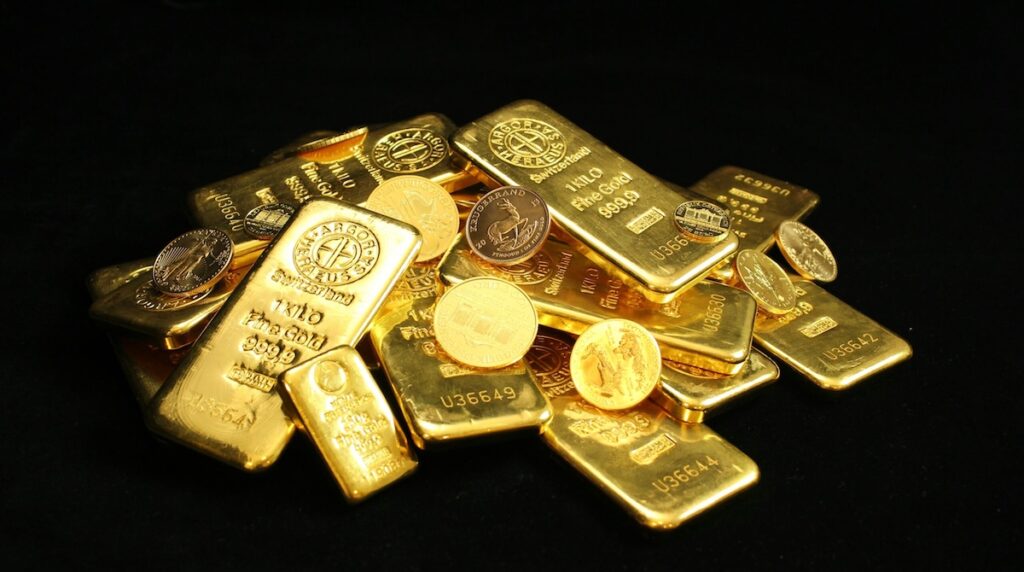
Picture this: Society has collapsed. The US financial system, once the envy of the world, has crumbled, and global markets are in chaos. The dollar is worthless; food is scarce, and finding fresh water and safe shelter are your most urgent priorities. You have banded together with family and friends in an attempt to survive this post-apocalyptic world. But you have an ace in the hole. You have… GOLD.
If this seems absurd, it’s because it is.
So why does gold capture our attention so much? Gold has recently been in the headlines once again following record returns, however…
Gold will have zero intrinsic value in a survival situation. If it has any transactional value, it will likely be forcefully taken from you by those with the means to do so.
As far as societal collapse is concerned, gold is worthless; you have just as much practical use for platinum, natural gas, or cobalt (all of which have outperformed gold year-over-year as of this writing) or any number of other commodities.
Key Takeaways
- Gold is not a reliable inflation hedge or long-term wealth builder compared with diversified equities.
- Gold’s value depends on demand, not earnings; it produces no income and adds storage/security costs.
- Historical data show high volatility and long multi-year drawdowns for gold; timing is hard.
- Gold can be a sentiment indicator during uncertainty, but that doesn’t make it a superior investment.
- If used at all, treat gold as a small, non-core diversifier, not a primary growth asset.
Definitions
Is Gold an Inflation Hedge?
Okay, but what about inflation? Investors flock to gold as an inflation hedge, right? Unfortunately, the data doesn’t bear this out—gold is not necessarily an effective inflation hedge. While it’s true that over the long term, gold has more than kept pace with inflation, it’s also true that other asset classes have done a far better job at outperforming inflation, as found in many gold vs stocks comparisons.
Gold Volatility and Long-Term Returns
Gold is extremely volatile, having suffered yearly declines of over 50% as well as sustained long periods (10+ years) of negative annualized returns.
Since 1970, 22 years have seen negative annual returns for gold (vs 11 years for the S&P 500). That’s the practical issue in gold vs S&P 500 comparisons.
Many investors think that rising gold prices reflect the increasing value of gold. That seems like an obvious conclusion, but really, what is the value of gold?
It doesn’t produce income, it costs money to store and protect, and, unless you plan to survive the apocalypse by building a lot of semiconductors, it has little utilitarian value to the everyday person. While gold is useful for specific applications including jewelry, industrial, or electrical parts, when held as an inert metal for “investment”, it does not produce income (like stocks or bonds are expected to).
Gold’s price increases because demand for it increases, but much of that demand is built on the expectation that demand for it will be even higher in the future. But why? As I pointed out, it’s not generating wealth like a true investment, so you’re just hoping that someone in the future will be willing to pay more for it than you did. That’s a risky proposition if you’re trying to survive an apocalypse or, more importantly, build wealth.
Historical Returns, Volatility and Correlations for Gold and Common Asset
Here’s the part most people skip: gold volatility and gold long-term returns don’t look the way the headlines suggest.
Classes

Data is based on nominal annual returns from 1928-2024. Sources: Ken French Data Library and NYU Stern School of Business.
As we can see from the historical data, gold has shown higher volatility than U.S. stocks, with a lower Average Annual Return. It is also less correlated to inflation than U.S. Treasury Bills, making it a less ideal inflationary hedge.
If you have perfect timing and know exactly when to get into gold and exactly when to get out, it would be a good option. Of course, if you have perfect timing, stocks, again, would be a far more lucrative strategy. But alas, no one has perfect timing. Instead, we are faced with how best to prepare for an uncertain future with our present resources, and gold is not a salve for anything but the most specific and unlikely future scenario.
I believe gold prices could more accurately be viewed as an indicator. As uncertainty increases, and faith in financial systems wanes, investors flock to gold as a perceived haven. This drives up the demand and the price and can also reinforce the notion that gold is a “good investment”. But without earnings, it’s not really an investment.
Should You Buy Gold Now?
So, should I buy gold now? My answer depends on what you expect gold to do for you—and what you’re comparing it to.
Does this mean that I believe gold will fail as an asset and not provide positive returns in the future? No, of course not. Gold has been a near-constant through the evolution of human society, and I don’t expect that to change. Do I therefore believe gold maximizes our risk-adjusted return and provides a reliable tool for accomplishing future goals? Again, no. Investors should carefully consider if and where gold fits into their portfolio, and guard against judging its value based on recent good (or bad) returns.
I would also like to point out that this is my opinion. Plenty of others in the investment world have also opined about gold (Warren Buffett is not a fan), and plenty more will have opinions about it in the future. Because that’s all we have with gold: opinions and guesses about the future. There are no earnings to measure its value against, no productive business to value. Buying gold for long-term appreciation is an opinion, a speculative gamble, not investing. It can work, but I don’t believe it’s the best bet for building wealth over the long term.
Frequently Asked Questions
Is gold a good inflation hedge?
Not consistently. Over very long horizons it may keep up with inflation, but other assets—especially diversified equities—have historically outperformed after inflation.
What factors influence gold price volatility?
Gold’s price is demand-driven and lacks earnings to anchor value. Sentiment shifts, policy, and currency moves can drive large swings.
Should I hold any gold?
Possibly as a small diversifier if it helps you stick with a plan. It should not replace a diversified core portfolio.
Why compare gold to the S&P 500?
Stocks reflect ownership in productive businesses with earnings and growth; over time, they’ve delivered higher risk-adjusted returns.
Is gold useful in an apocalypse scenario?
Practically, no. In survival settings, food, water, energy, and security matter more than a non-productive metal.
